
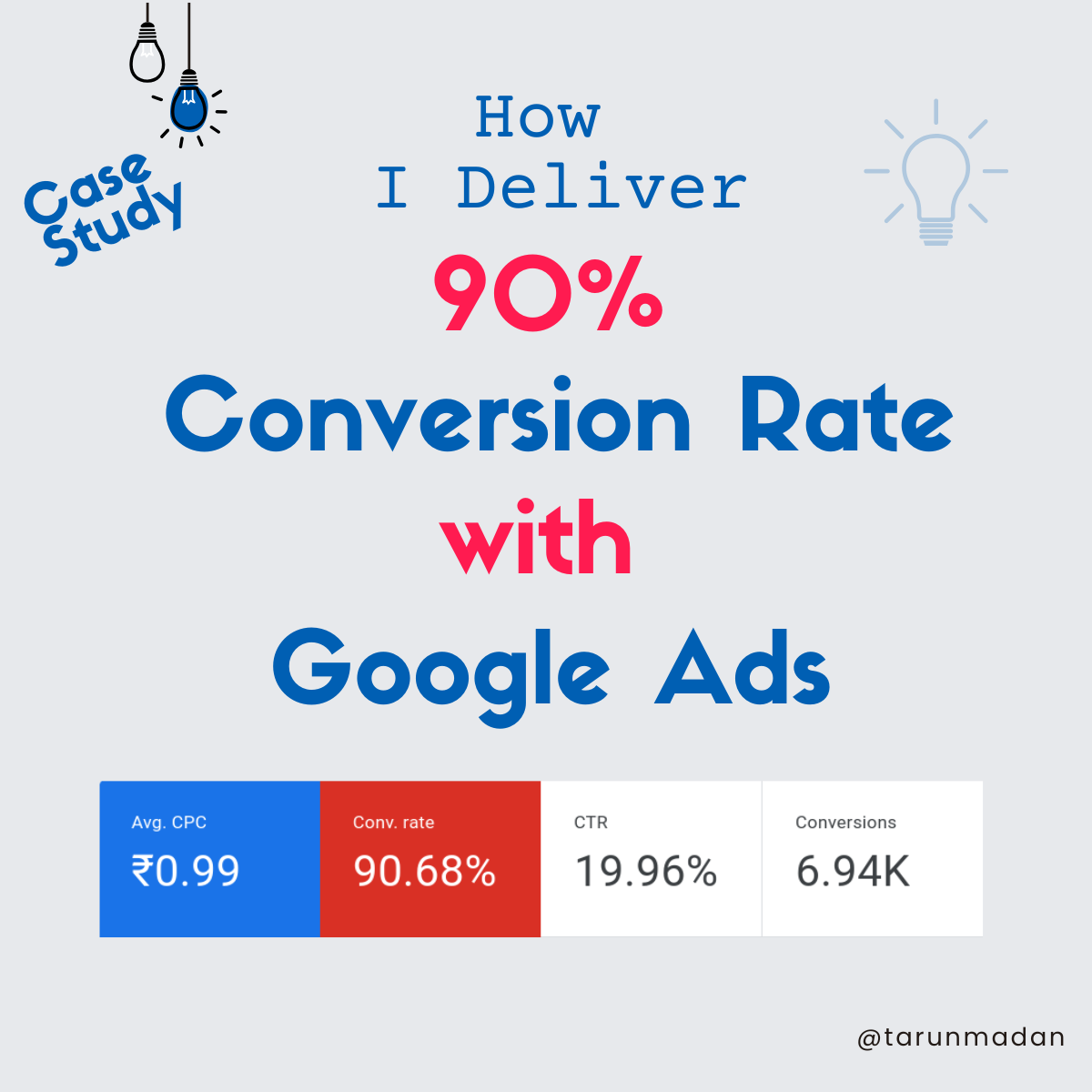
How I delivered a 90% Conversion Rate in a Lead Gen Campaign with Google Search Ads?
Here is a 8-step strategy I followed
1. Extensive Keyword Research
I identified high-search-volume keywords within the category. This strategic selection allowed me to trigger ads for the most relevant keywords, maximizing visibility.
2. Segregating Keywords by User Intent
I categorized keywords based on intent, such as “best,” “near me,” “free,” “online,” “predictions,” etc. This granular approach ensured that each keyword group matched specific user needs.
3. Separate Ad Groups for Each Keyword Intent
To ensure precise targeting, I created separate ad groups for each keyword intent. This helped serve ads that aligned with users’ search behavior.
4. Customized Ad Copies for Each Ad Group
I tailored each ad copy to match the user’s intent. For example, if someone searched for “Best Residential Property in Bangalore,” my ad addressed that exact need, improving relevance and engagement.
5. Landing Page Alignment
Consistency between the ad copy and landing page is key. If the messaging didn’t match, users tended to drop off. Moreover, Google’s algorithm recognizes this and can lower ad rankings, so syncing the two was crucial for success.
6. Negative Keywords
To avoid wasted spend, I implemented negative keywords at both the ad group and campaign levels. This ensured that my ads weren’t triggered by irrelevant searches.
7. Location Optimization
Not every location performed equally well. By focusing on the top-performing regions, I made the most efficient use of the ad spend.
8. Timing Optimization
After gathering sufficient data (typically over 14-30 days), I adjusted the ad schedule to run only during the most productive time windows.
90% conversion rate isn’t luck — it’s strategy, precision, and constant optimization. If you’re still chasing clicks instead of conversions, it’s time to rethink your approach